
Tooth Extraction: What to Expect and How to Heal
When a tooth is badly broken or has extensive decay, the goal is almost always to save it — usually with a filling, crown, root canal, or similar restorative treatment. But sometimes a tooth is simply too damaged, infected, or compromised to be restored safely. In those situations, removing the tooth (extraction) becomes the better choice, both to eliminate the source of infection and to protect the surrounding teeth, gums, and bone. Extractions are also sometimes recommended for severely impacted wisdom teeth, teeth that can’t be saved after trauma, or to make room before orthodontic treatment.
Kailua Town Dental provides dental extractions in Kailua, HI. Call 808-261-5951 to learn more and schedule an appointment.
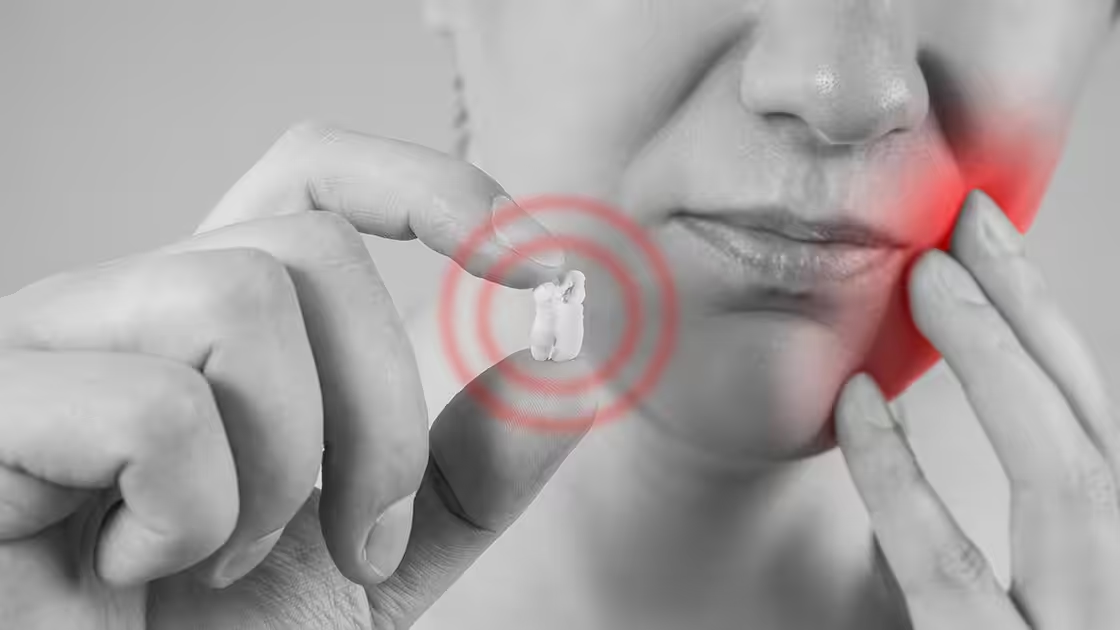
What Happens During the Procedure
The vast majority of extractions are straightforward and done right in the dental office with local anesthesia — the same type of numbing medication used for fillings. Once the area is fully numb, you shouldn’t feel any pain, though you may notice pressure or pushing, which is normal. Your dentist will gently rock the tooth back and forth to widen the socket and release the ligament fibers that hold the tooth in place, then lift it out. In some cases, particularly with teeth that are broken below the gumline or heavily impacted, the procedure is a bit more involved and may require a small incision or removing the tooth in sections. Right after the tooth comes out, your dentist will place a folded gauze pad over the socket and have you bite down firmly to apply steady pressure — this helps stop the bleeding and, more importantly, encourages a blood clot to form inside the socket. That clot is critical because it acts as a natural bandage over the bone and nerves underneath. You may also receive a few stitches to help the gum tissue heal; some types dissolve on their own within a week or two, while others are removed at a short follow-up visit.
The First 24 Hours: Protecting the Blood Clot
How well you heal after an extraction comes down largely to how well you protect that blood clot during the first day or so. If the clot dislodges too early, the underlying bone and nerves become exposed — a painful condition called dry socket (alveolar osteitis), which typically shows up three to five days after the procedure. Dry socket is one of the most common post-extraction complications, and almost every prevention step is aimed at not disturbing that clot. Clinical guidance is consistent across the American Dental Association and peer-reviewed sources: for at least 24 hours, don’t drink through a straw, don’t smoke or vape, don’t spit forcefully, and don’t rinse your mouth aggressively. Each of these activities creates suction or pressure that can pull the clot out of place. After 24 hours, gentle rinsing with warm salt water helps keep the area clean. Tobacco is especially problematic — smoking reduces blood flow and dramatically increases dry socket risk — so dentists strongly recommend avoiding it for at least 48 to 72 hours, and longer if possible.
Managing Discomfort and Eating
Some mild swelling, tenderness, and minor bleeding or oozing for the first day or two is normal. Applying an ice pack to the outside of your cheek in 15- to 20-minute intervals during the first 24 hours helps keep swelling down. Most people manage discomfort well with over-the-counter pain relievers like acetaminophen or ibuprofen — your dentist will give you specific guidance based on your health history, and in some cases may prescribe stronger medication. Stick to soft, cool foods for the first day or two — yogurt, scrambled eggs, mashed potatoes, smoothies (eaten with a spoon, not a straw), lukewarm soup, applesauce, and similar options are all good choices. Avoid anything crunchy, spicy, sticky, or very hot, and try to chew on the opposite side of your mouth. You can continue brushing and flossing your other teeth normally, but be careful around the extraction site for the first 24 hours — after that, gentle brushing nearby is fine.
Healing Timeline and When to Call Your Dentist
Most people start feeling noticeably better within two to three days, and the soft tissue over the socket typically closes within one to two weeks. The underlying bone takes longer — several months — to fully fill in and remodel, which is worth knowing if you’re planning to replace the tooth with an implant or bridge. Your dentist will talk with you about replacement options, since leaving a gap long-term can cause neighboring teeth to shift and the jawbone in that area to shrink. Contact your dental office promptly if you experience severe or worsening pain after the third day, pain that radiates to your ear or jaw, a bad taste or foul odor from the socket, heavy bleeding that doesn’t slow down with gauze pressure, a fever, or significant swelling that’s getting worse rather than better. These can be signs of dry socket or infection, and both respond well to prompt treatment — so don’t wait it out.